Saturday, December 15, 2012
Typhoon Bopha - death toll increases
Typhoon Bopha wreaked havoc in the Philippines, leaving tens of thousands of people without homes, fields and crops devastated, and 955 dead, with more than 800 still missing.
Oxfam and other agencies are responding to people's emergency needs providing clean water for drinking washing and bathing, shelter materials, hygiene and water kits. We've also given cash grants to families still living in evacuation centres.. See some of our work here.


Tuesday, October 16, 2012
Picture Story
Picture Story: Picture Story
It's #World Food Day: see how #Oxfam's #ECHO-funded projects in #Yemen are helping some of the poorest families to eat ow.ly/evn4k
It's #World Food Day: see how #Oxfam's #ECHO-funded projects in #Yemen are helping some of the poorest families to eat ow.ly/evn4k
Sunday, September 30, 2012
Yemen's Hunger Crisis - C4 news coverage
Thursday, September 27, 2012
Yemen: coping with a hunger crisis.
Friday, August 10, 2012
Ramadan in Yemen - the hardest year ever
As Yemen is gripped by its worst-ever humanitarian crisis, with 10 million going hungry and more than five million in urgent need of assistance, this year's Ramadan is proving harder than ever.
In better years, Yemenis would traditionally stock up with food as the Muslim fasting month Ramadan approached. Special purchases of sweet items like dates and juice would be among the items. Breaking the fast with iftar dinners at night with family and friends would be a celebratory event.
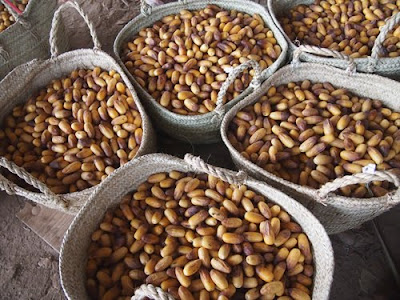 Copious amounts of food are still available in the markets: fresh fruit and vegetables, breads, all kinds of grains, sweets and dates. In small shops, the bright colours of boxes and tins red, gold and green are dazzling. The problem is that the cost of food items has rocketed and Yemen, which imports around 90% of its food needs, is particularly vulnerable to global food prices.
"How can someone with a big family and no work afford to buy anything with these high prices?" complained one woman I met in the city market of Al Hodeidah.
The high price of diesel -- which has doubled in Al Hodeidah in the past month -- has also had an impact.
A date farmer in the wholesale market told me he spent three times as much money on fuel to operate pumps to irrigate his palm trees; but his crop size was about 20% less than normal.
In the debilitating heat, which hits the high 40s centigrade, ice is in high demand. But according to one shopkeeper, the cost of powering generators to keep the ice cold in freezers has seen prices rise seven-fold.
This year, many families are struggling to pay for the most basic of items. Large numbers skip meals and survive on little more than bread and tea.
And that's why international aid agency Oxfam has provided a cash lifeline to more than 100,000 people in Al Hodeidah, giving them a cash lifeline so they can get through the next few months, and feed their families.
Widower, Zuhra Wans, in her 50s, who lives in Bayt al-Faqih district, in Al Hodeidah, can only dream of better years. "Things were good three years ago," she recalled dreamily. "Then, during Ramadan, everything was available." She reels off a list of what she used to buy -- items that are now far beyond their reach. Today, family meals mostly consist of bread.
In her small house, in Al Hawak village, Zuhra takes me into her kitchen. There's just one eight kilo sack of grain that the family will use to make bread. She tells me it used to cost 800 riyals (nearly $4 US dollars); today, its costs 1,400 riyals (about $6.5 US dollars). The sack will only last them for two weeks, and she's already worried by how much her next purchase will cost.
Copious amounts of food are still available in the markets: fresh fruit and vegetables, breads, all kinds of grains, sweets and dates. In small shops, the bright colours of boxes and tins red, gold and green are dazzling. The problem is that the cost of food items has rocketed and Yemen, which imports around 90% of its food needs, is particularly vulnerable to global food prices.
"How can someone with a big family and no work afford to buy anything with these high prices?" complained one woman I met in the city market of Al Hodeidah.
The high price of diesel -- which has doubled in Al Hodeidah in the past month -- has also had an impact.
A date farmer in the wholesale market told me he spent three times as much money on fuel to operate pumps to irrigate his palm trees; but his crop size was about 20% less than normal.
In the debilitating heat, which hits the high 40s centigrade, ice is in high demand. But according to one shopkeeper, the cost of powering generators to keep the ice cold in freezers has seen prices rise seven-fold.
This year, many families are struggling to pay for the most basic of items. Large numbers skip meals and survive on little more than bread and tea.
And that's why international aid agency Oxfam has provided a cash lifeline to more than 100,000 people in Al Hodeidah, giving them a cash lifeline so they can get through the next few months, and feed their families.
Widower, Zuhra Wans, in her 50s, who lives in Bayt al-Faqih district, in Al Hodeidah, can only dream of better years. "Things were good three years ago," she recalled dreamily. "Then, during Ramadan, everything was available." She reels off a list of what she used to buy -- items that are now far beyond their reach. Today, family meals mostly consist of bread.
In her small house, in Al Hawak village, Zuhra takes me into her kitchen. There's just one eight kilo sack of grain that the family will use to make bread. She tells me it used to cost 800 riyals (nearly $4 US dollars); today, its costs 1,400 riyals (about $6.5 US dollars). The sack will only last them for two weeks, and she's already worried by how much her next purchase will cost.
 Zuhra shows me the only food they have in the kitchen
At least one-third of all households in Yemen are surviving by buying food on credit. Shopkeepers, in turn, buy their stock on credit. The local markets mostly operate on this precarious system.
So far, its worked. But shopkeepers like 25-year-old Ala'a Abdullah Farag Wans, who has a small store in Al Hawak, sleep poorly these days, worried that their customers won't be able to pay them back - and the defaults could prove devastating.
"The majority of my customers buy on credit" he said. "On average, my customers owe me about 30,000 riyals ($139 US dollars) each month.
Zuhra shows me the only food they have in the kitchen
At least one-third of all households in Yemen are surviving by buying food on credit. Shopkeepers, in turn, buy their stock on credit. The local markets mostly operate on this precarious system.
So far, its worked. But shopkeepers like 25-year-old Ala'a Abdullah Farag Wans, who has a small store in Al Hawak, sleep poorly these days, worried that their customers won't be able to pay them back - and the defaults could prove devastating.
"The majority of my customers buy on credit" he said. "On average, my customers owe me about 30,000 riyals ($139 US dollars) each month.
 Ala'a worries he may be forced to go out of business because so many owe him money
I worry one day I'll go out of business because my customers can't pay me back. Sometimes, I get calls from traders asking me when I'm going to pay them their money. Others stop by the store to ask me the same question.
Another shopkeeper, 23-year-old Yunus Al-Hamadi, tells me a similar story. "We're owed about 4 million riyals in debts by our customers. We buy our food from wholesalers and owe them about nine million riyals."
But Yunus is philosophical about the future. We don't worry, he says, because we can't change anything. We just live day to day.
Follow Caroline Gluck on Twitter: www.twitter.com/carooxfam
Ala'a worries he may be forced to go out of business because so many owe him money
I worry one day I'll go out of business because my customers can't pay me back. Sometimes, I get calls from traders asking me when I'm going to pay them their money. Others stop by the store to ask me the same question.
Another shopkeeper, 23-year-old Yunus Al-Hamadi, tells me a similar story. "We're owed about 4 million riyals in debts by our customers. We buy our food from wholesalers and owe them about nine million riyals."
But Yunus is philosophical about the future. We don't worry, he says, because we can't change anything. We just live day to day.
Follow Caroline Gluck on Twitter: www.twitter.com/carooxfam


Monday, July 23, 2012
Yemen's hunger crisis worsening
Tens of thousands of people will be left without aid in Yemen’s hunger crisis unless more money is urgently given to the aid effort, Oxfam and Islamic Relief have warned. Nearly a quarter of the population are in need of emergency aid to survive because they do not have enough food to eat.
The aid agencies said they needed an additional $38 million to carry out their work and have been forced to delay aid programmes due to start this month because of lack of funding. Oxfam’s programme for Hajjah in northern Yemen, which was due to give 140,000 people cash to buy food, was put on hold two weeks ago. Another aid programme to help over 300,000 people this July in the badly hit rural area of Al Hodeidah on Yemen’s west coast has been scaled back to help just 100,000.
Islamic Relief needs $2million to help an additional 180,000 people with nutrition and early recovery assistance – none of this money has been raised to date. Oxfam is aiming to help one million people, but only has funding to reach a quarter of that figure
Colette Fearon, Oxfam’s Country Director in Yemen, said:
“Yemen is dealing with a catastrophic food crisis and people really need our help. People are getting into worrying levels of debt just to get food for their families – and surviving on a meagre diet of tea and bread. One woman told Oxfam how she planned to sleep in the day to avoid the hunger pangs. We have the capacity to respond - plans have been prepared and staff are ready. But lack of funding is severely limiting what we can do. If we got the money we needed today, we would be able to scale up straight away and begin reaching the people who desperately need our help.”
The warning came as the UN increased the amount of money being sought for its Yemen appeal in response to mounting needs. The appeal increased from $447 million to $591 million. It is just 42 percent funded. Some 10 million people – 44 percent of the population of Yemen – do not have enough food to eat. The UN estimates that 267,000 Yemeni children are facing life threatening levels of malnutrition.
Yemen is now in the midst of its hunger season, before the next harvest in October. The start of Ramadan is also pushing up prices in markets. For example, sugar and wheat prices have increased by 21 percent and 42 percent in rural areas compared to prices last month. The aid agencies called on more donors to fund the aid response, warning that failing to help people quickly could cost lives now and have serious consequences for Yemen for decades to come.
Hashem Awnallah, Islamic Relief’s Country Director in Yemen, said:
“One in three children under five in Al Hodeidah is acutely malnourished – double the level that constitutes an emergency in UN terms. Children are being taken out of school to work, and an increase in early marriage has been reported. As well as being dangerous for children’s health, this crisis could rob children of a decent future and lead them to poverty, alienation and unrest.”
The agencies said although $4bn was pledged at the Friends of Yemen meeting in May, where world leaders met to discuss the country’s future, it is unclear when this money will arrive in Yemen and how this money will be spent. The agencies said donors needed to respond to humanitarian needs immediately and stressed that they should look beyond food aid. There is food available in markets in Yemen, but people cannot afford to buy it. The agencies said that donors can help poor Yemeni families by ensuring that they have the cash they need to purchase food.
Check out my photostory on BBC Online:-
http://www.bbc.co.uk/news/world-africa-18834478
Tuesday, May 22, 2012
Behind prison walls in Congo (DRC)


Subscribe to:
Posts (Atom)